
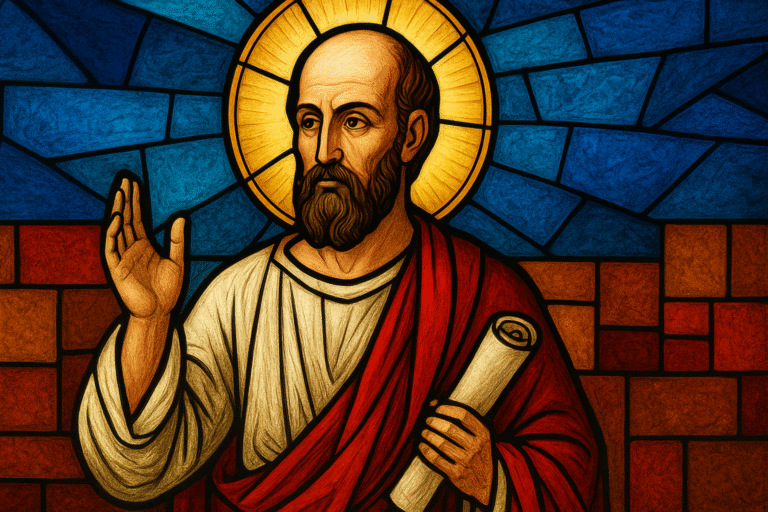
Why Paul Matters
Among the figures who shaped Christianity, few are as influential or as debated as the Apostle Paul. Unlike Peter, John, or James, Paul was not part of the original twelve disciples who followed Jesus during His earthly ministry. Instead, his authority came from a dramatic conversion and a personal commission from the risen Christ. This unique position, combined with the enduring influence of his letters, has made Paul central to Christian theology. At the same time, it has raised significant controversies. To understand the development of Christianity, it is essential to examine how Paul differs from the other apostles, the debates surrounding his teachings, and the academic questions his legacy continues to provoke.
Who Was Paul? From Persecutor to Apostle
Paul, originally known as Saul of Tarsus, was a devout Pharisee and initially a fierce persecutor of the early Christian movement (Acts 8:1–3; Philippians 3:5–6). According to Acts 9:1–19, his life was transformed by an encounter with the risen Jesus on the road to Damascus. Unlike the twelve apostles, who were personally chosen by Jesus during His ministry (Mark 3:13–19), Paul claimed his apostleship came directly from divine revelation (Galatians 1:11–12). His background as both an outsider and later a leader gives Paul a distinct role among early Christian figures.
Paul’s Apostolic Authority: A Different Kind of Apostle
Paul’s claim to authority set him apart from the Twelve. He described himself as the “apostle to the Gentiles” (Romans 11:13), emphasizing a mission field that was largely neglected by the other apostles, who primarily focused on Jewish communities (Galatians 2:7–9). Where Peter, James, and John drew on their personal experiences with Jesus, Paul appealed to his visionary encounter with Christ (1 Corinthians 15:8) and the authority of the Spirit (2 Corinthians 3:5–6). This distinction has led some scholars to question whether Paul can be considered an apostle in the same sense as the Twelve. Even so, his writings reveal a deep conviction that his calling was of equal, if not greater, significance (1 Corinthians 9:1–2).
How Paul Differs from the Other Apostles
The differences between Paul and the other apostles appear in several key areas.
- Mission Focus
- Paul directed his efforts toward Gentiles across the Roman Empire (Acts 13:46–47; Romans 15:15–16).
- The Twelve largely ministered to Jewish audiences in and around Jerusalem (Acts 1:4–8; Acts 15:1–2).
- Theological Emphasis
- Paul’s writings explore justification by faith and the role of grace (Romans 3:28; Galatians 2:16; Ephesians 2:8–9).
- Other apostolic traditions, as reflected in the Gospels and Acts, emphasize the memory of Jesus’ earthly ministry (Luke 24:44–49; Acts 10:39–42).
- Literary Legacy
- Paul left behind thirteen letters, though some are disputed, which have shaped core Christian doctrine (Romans, 1 Corinthians, Galatians, etc.).
- The Twelve are not directly responsible for written works on the same scale, although Peter and John each authored letters that became part of the New Testament (1 Peter 1:1; 1 John 1:1–4).
- Authority and Identity
- Paul consistently defended his apostleship against critics (2 Corinthians 11:5; Galatians 1:1).
- The original apostles did not face the same degree of challenge regarding their legitimacy.
The Importance of Paul’s Letters
Pauline epistles form a substantial portion of the New Testament. Letters such as Romans, Galatians, and 1 Corinthians have had a profound influence on Christian theology. They address issues of salvation (Romans 5:1–2), the role of the Mosaic Law (Galatians 3:23–25), spiritual gifts (1 Corinthians 12:4–11), and church order (1 Timothy 3:1–13). His teachings on faith and grace became foundational for later theologians such as Augustine and for the Protestant Reformers like Martin Luther and John Calvin. Without Paul’s letters, much of Christian theology as it is understood today would be unrecognizable.
Controversies Surrounding Paul
Paul has not escaped criticism, both historically and in modern scholarship.
- Conflict with Peter: In Galatians 2:11–14, Paul recounts a sharp disagreement with Peter in Antioch over the treatment of Gentile believers. This “Paul versus Peter” tension illustrates early divisions within the church.
- Did Paul invent Christianity? Some critics argue that Paul reshaped Jesus’ message into a new religion centered on salvation by faith rather than the kingdom of God (Romans 10:9–10). Others contend that Paul faithfully transmitted the implications of Christ’s life, death, and resurrection (1 Corinthians 15:1–4).
- Social Issues: Passages attributed to Paul on women’s roles (1 Corinthians 14:34–35; 1 Timothy 2:11–12), slavery (Ephesians 6:5; Philemon 1:15–16), and obedience to governing authorities (Romans 13:1–2) have been hotly debated. Scholars continue to ask whether these were culturally bound instructions or timeless principles.
- Law and Grace: Paul’s strong stance that believers are not “under the Law” (Galatians 3:23–25; Romans 6:14) remains a point of contention in Jewish-Christian dialogue and in Christian theology itself.
Major Academic Questions About Paul
Scholars continue to debate critical questions about Paul’s identity and teachings.
- Was Paul truly an apostle, or a self-appointed missionary (1 Corinthians 9:1–2)?
- Did Paul’s theology diverge from Jesus’ message of the kingdom (compare Matthew 4:17 with Romans 3:28)?
- Which letters were authentically written by Paul? Scholars generally agree on seven undisputed letters, while others remain debated.
- Did Paul preserve or distort the earliest Christian tradition (Galatians 1:6–9)?
- To what extent should Christianity be considered Pauline Christianity?
These questions ensure that Paul remains a central figure in both theology and historical study.
Paul’s Lasting Impact on Christianity
Regardless of controversy, Paul’s role in spreading Christianity is unparalleled. By establishing churches across Asia Minor, Greece, and Rome (Acts 16:4–10; Acts 18:1–11), Paul transformed Christianity from a Jewish sect into a global faith. His theological reflections became the framework through which later generations interpreted the significance of Jesus. For this reason, some historians refer to Paul as the “second founder of Christianity.”
Grappling with Paul’s Legacy
Paul differs from the other apostles in origin, mission, writings, and theology. His letters form the backbone of Christian doctrine, even as they raise difficult questions that continue to be studied, debated, and contested. Understanding Paul requires balancing his unique voice with the witness of the other apostles. In doing so, both believers and scholars can deepen their grasp of how Christianity was shaped in its earliest generations and how it continues to be shaped by Paul’s enduring legacy.